Teens Rise Foundation and the Kyoto Prize Symposium Bring 600+ South County Students to the World Stage at UC San Diego
Six hundred students. Eleven schools. Three world-renowned laureates. One university campus that, for many of these students, had never felt within reach – until now.
In March, Teens Rise Foundation (TRF) coordinated one of its most ambitious events to date: bringing more than 600 high school students from across San Diego County to UC San Diego for the 25th Annual Kyoto Prize Symposium (KPS).
The Kyoto Prize is one of the world's most prestigious honors, recognizing individuals whose work has profoundly advanced science, technology, and human culture. Each spring, the Kyoto Prize Symposium brings its laureates to San Diego for a series of public lectures: a rare opportunity for learning, dialogue, and inspiration with some of the world's most consequential thinkers in science, technology, and human culture.
Both TRF and KPS made sure that the students who most needed access to that world were in the room for it, and school transportation was generously sponsored by the Kyoto Symposium Organization (KSO). For many of these students – first-generation, multilingual, and navigating systems that were never designed with them in mind – college can feel like someone else's destination. This event was designed to change that.
Three Years of Growing Access
This was TRF's third consecutive year partnering with the KPS, and its most ambitious. What began three years ago with six participating schools has grown to eleven, reflecting TRF's expanding reach across South County San Diego and its commitment to ensuring that the most transformational opportunities are accessible to students who would otherwise never encounter them.
This year's participating schools included San Ysidro High School, Mar Vista High School, Sweetwater High School, Southwest High School, Chula Vista High School, Montgomery High School, Hoover High School, Lincoln High School, Logan Memorial Educational Campus, Crawford High School, and Monarch School.
Learning from the World's Best Thinkers
Over two days, students attended lectures from three Kyoto Prize laureates whose work has shaped and continues to shape our future:
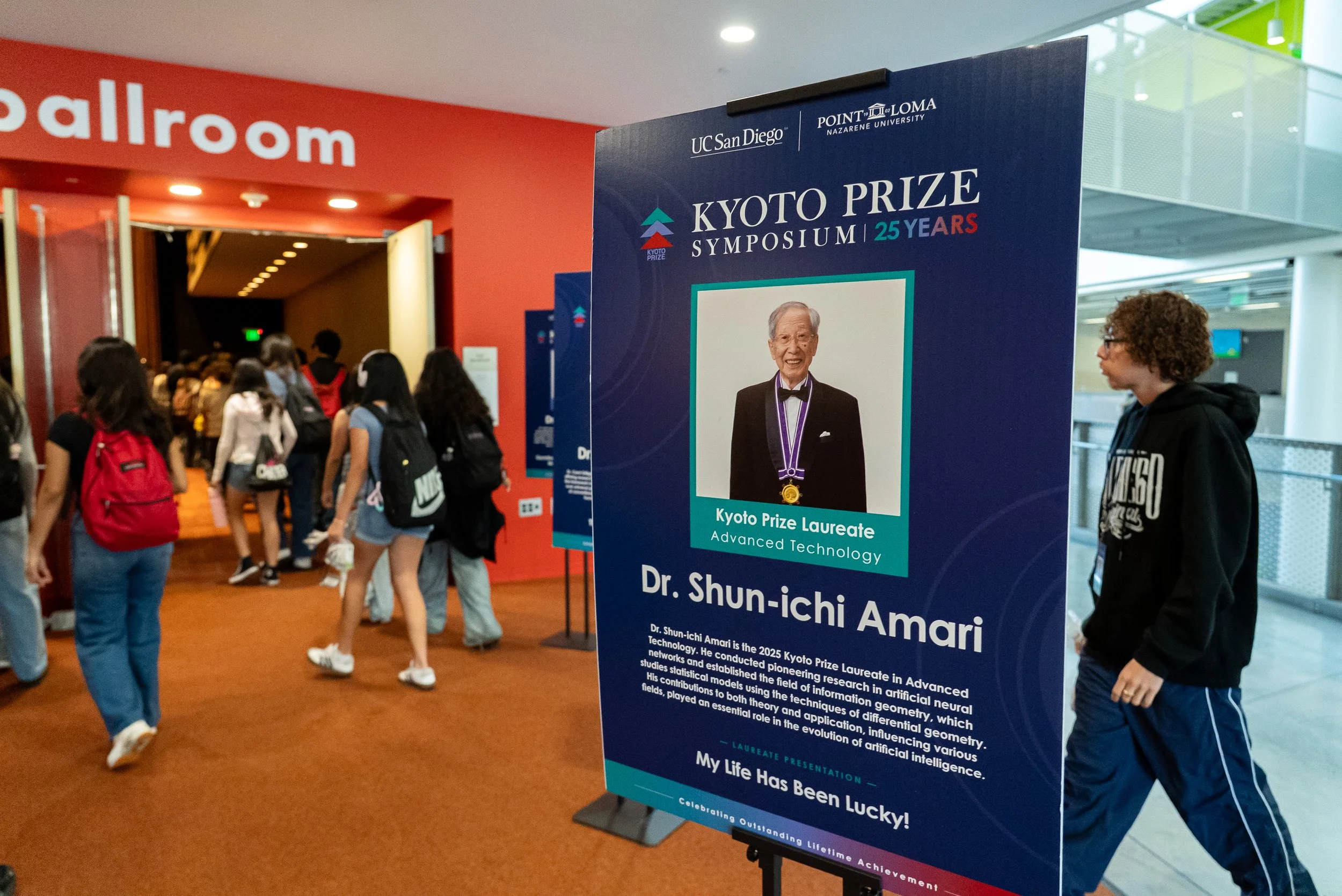
Dr. Shun-ichi Amari (Advanced Technology) is a pioneer in neural network theory: the mathematical foundation underlying modern artificial intelligence. His work helps explain how the brain processes what we see and how machines can learn to do the same.
Dr. Azim Surani (Basic Sciences) discovered that not all genes are created equal: that a gene's effect depends on whether it came from your mother or your father. His work on genomic imprinting is now a cornerstone of modern genetics and medicine.
Dr. Carol Gilligan (Arts & Philosophy) transformed the field of psychology by arguing that women's moral reasoning had been systematically misunderstood – and that care, relationship, and empathy are not weaknesses but the foundation of ethical life.
These are ideas that matter. TRF made sure students arrived ready to engage with them.
Prepared to Participate, Not Just Attend
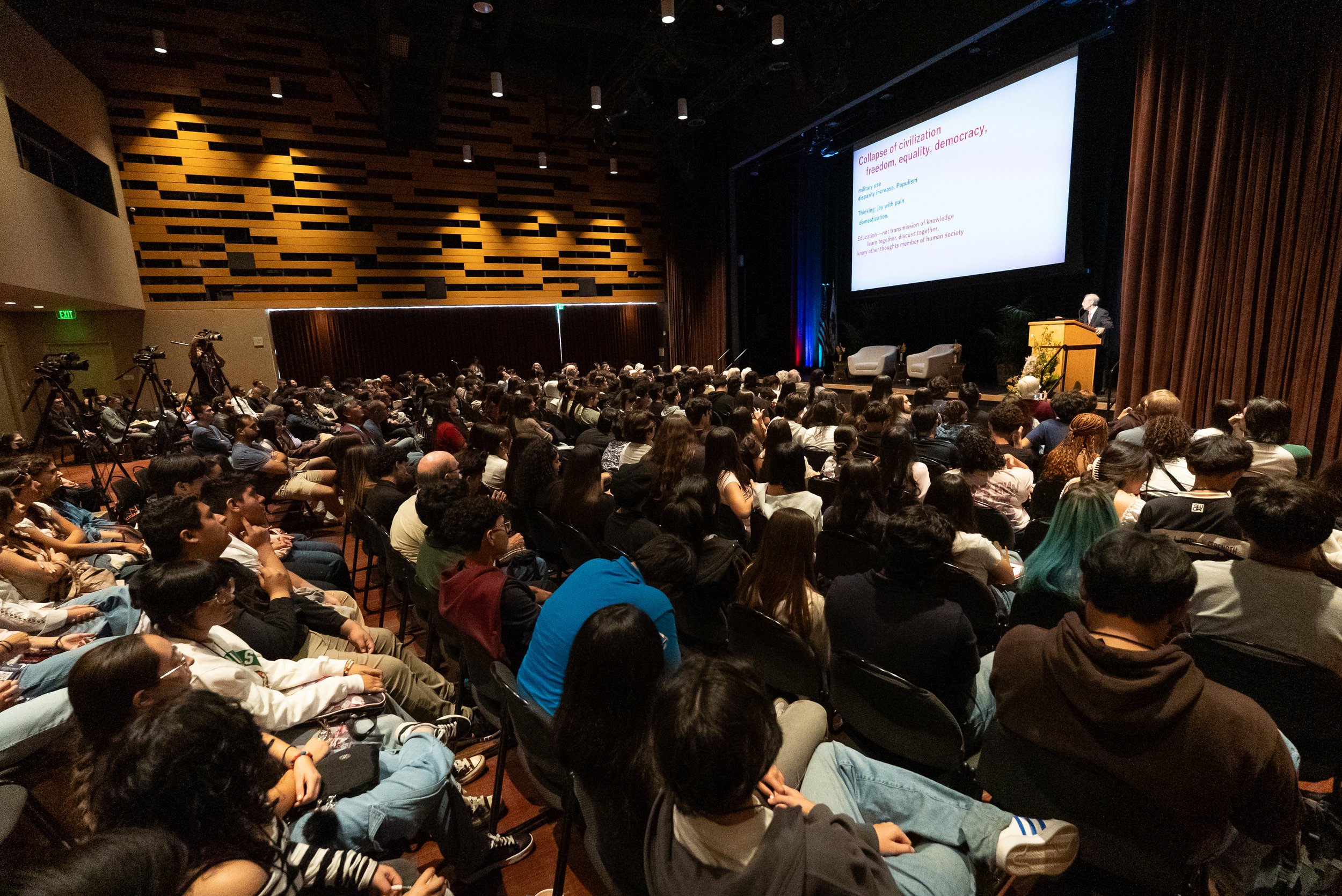
Most organizations would call bringing 600 students to a world-class symposium a success. TRF set a higher bar: students wouldn't just attend; they would participate.
In partnership with Winward Academy, TRF designed a structured preparation experience for both teachers and students before anyone set foot on campus. Students explored each laureate's background, engaged with their work in advance, and developed thoughtful, specific questions to submit to each speaker before the event.
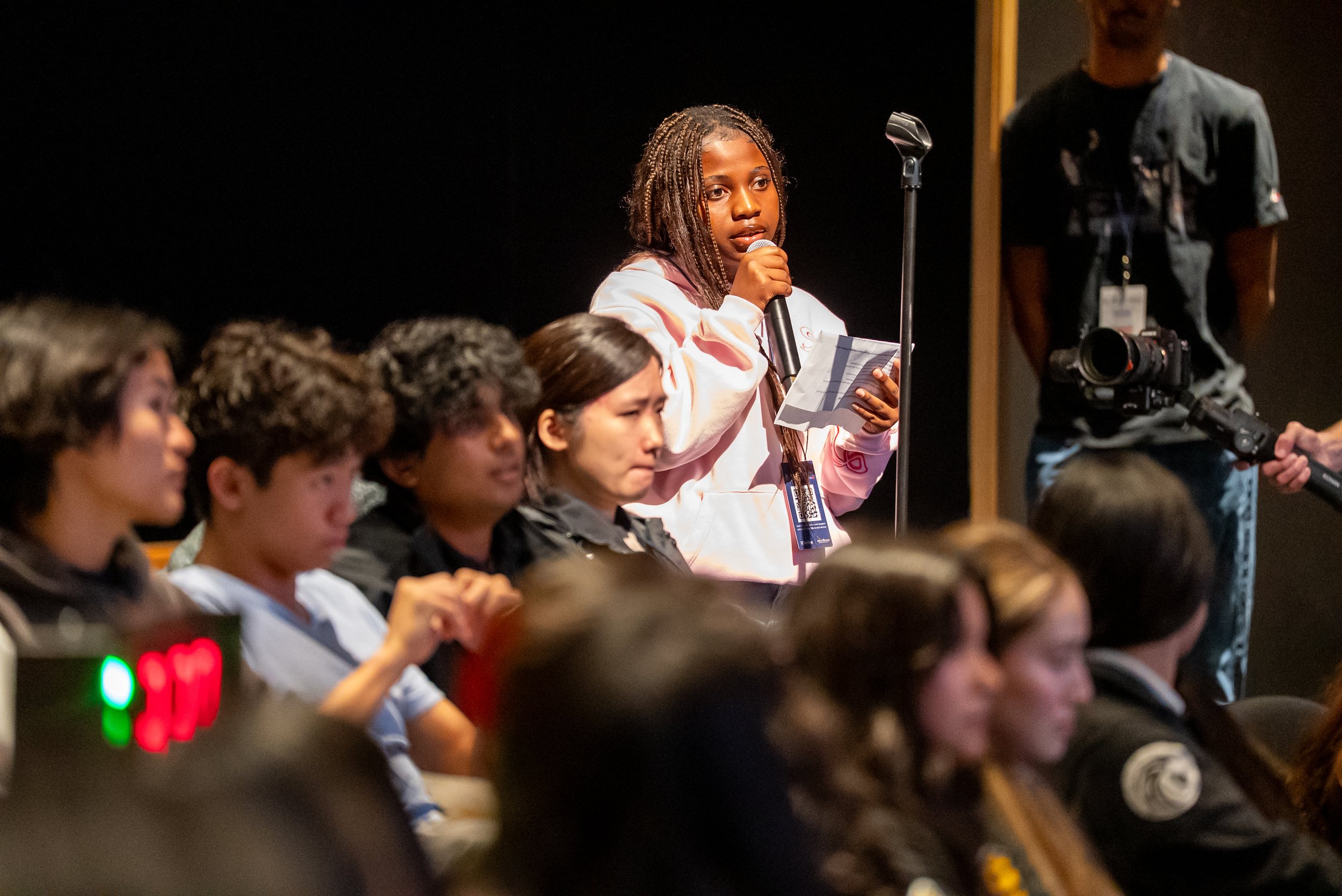
The result: students stood up in front of hundreds of people – on a university stage, in front of world-renowned scholars – and asked the questions they had prepared. For many of them, it was their first experience speaking publicly outside a classroom. They did it with confidence.
Seeing the Campus. Seeing Themselves.
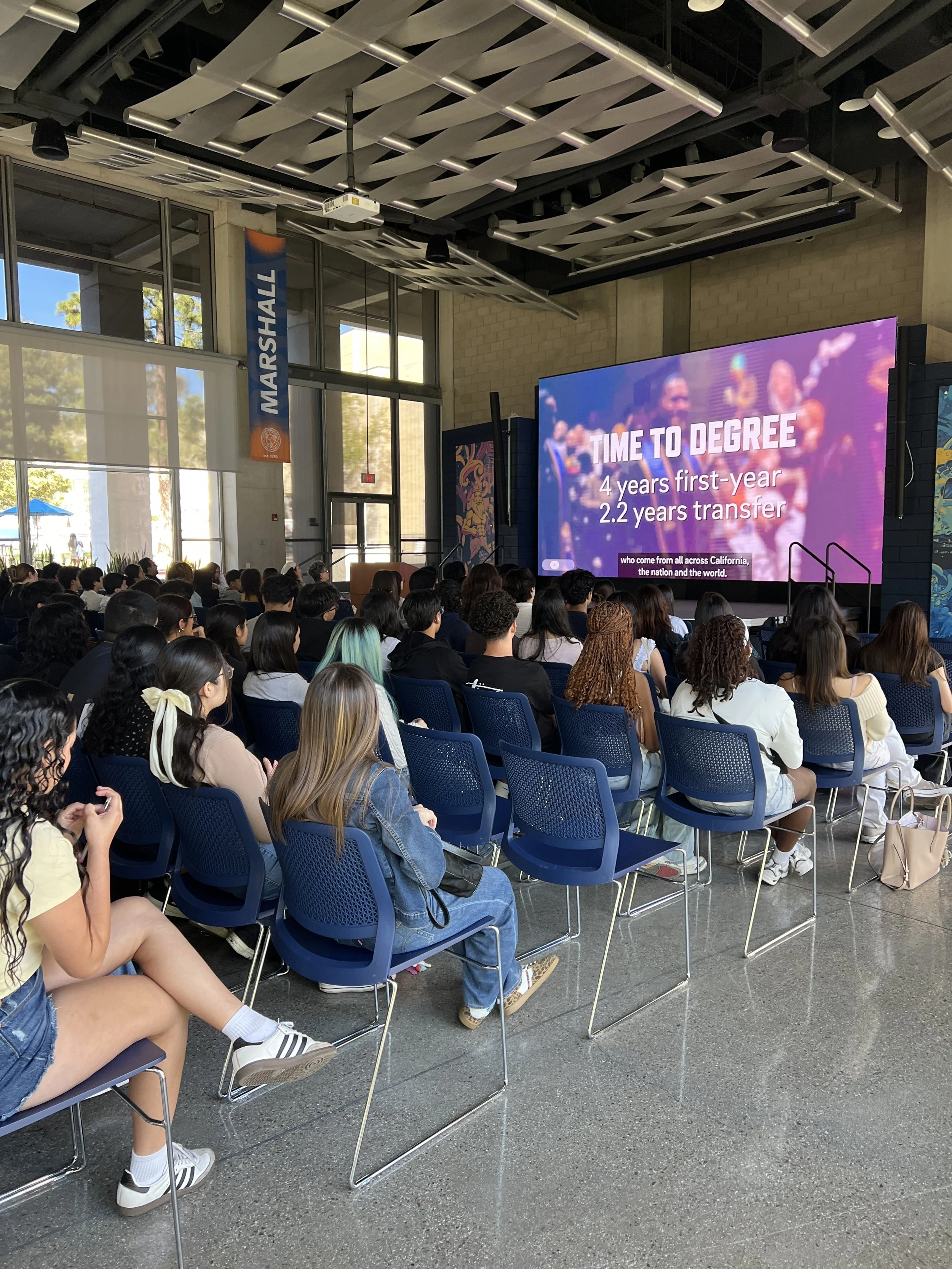
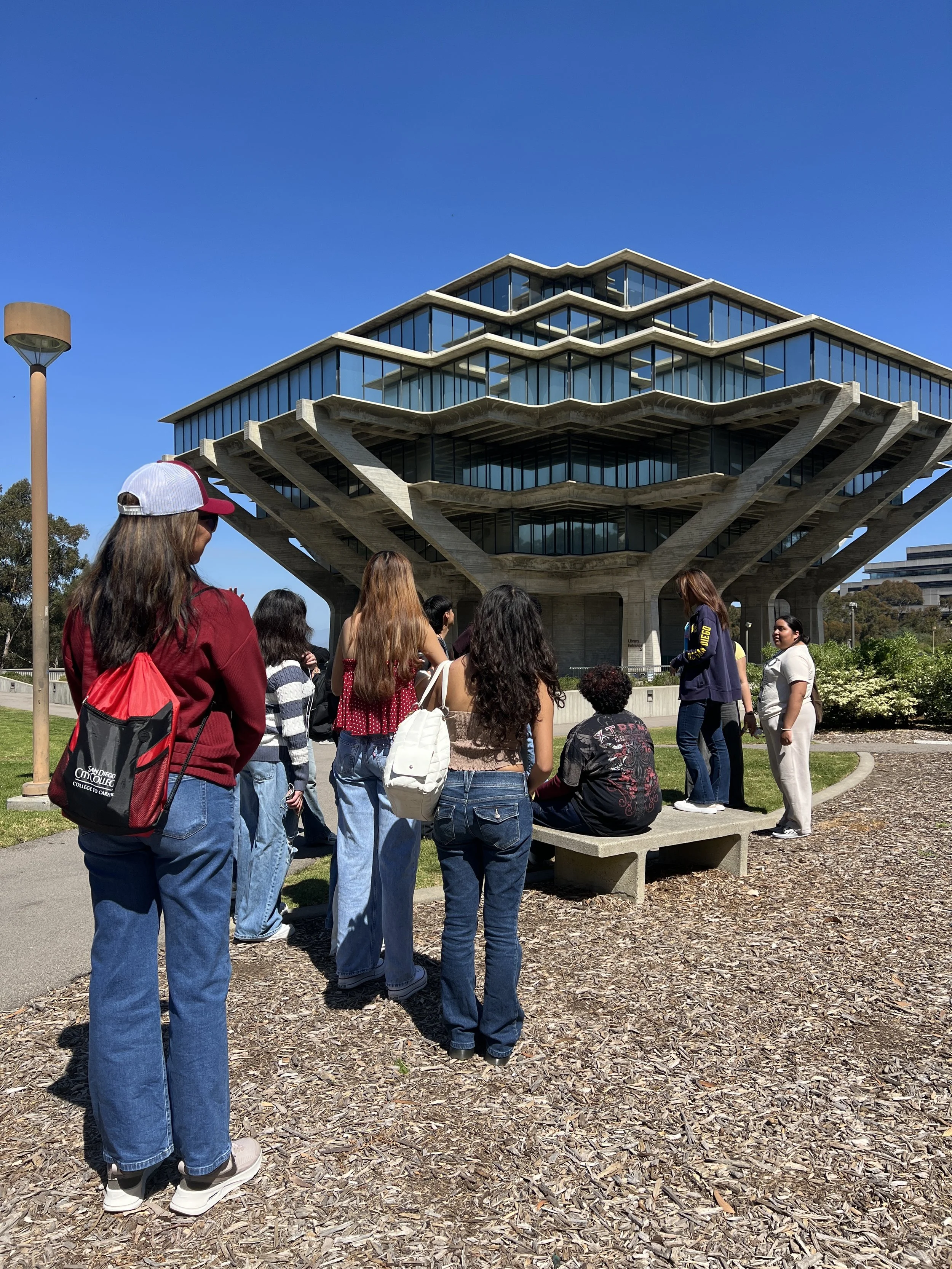
Beyond the symposium itself, TRF coordinated admissions presentations and more than 20 guided campus tours across the two days. Students learned what it takes to get into UCSD – the requirements, the majors, the support systems available to them – and then they walked through the campus themselves.
Something shifts when students walk through a university with their friends and start to picture themselves there. The campus stops being abstract. It becomes a place they can imagine calling home.
A heartfelt thank you to the UCSD student tour guides who gave their time, answered every question, and showed our students what college life actually looks like.
Why This Moment Matters
A student from San Ysidro stood up at UC San Diego and asked a question – a real question, carefully prepared, delivered in front of hundreds of people – to one of the world's leading scientists. That moment did not happen by accident. It happened because TRF prepared her, believed she belonged there, and put her in the room.
That is what access looks like. Not just opening a door, but making sure students are ready to walk through it.
TRF is proud to have made this experience possible for more than 600 students this year — and proud to partner with the Kyoto Prize Symposium to make it all possible. We look forward to growing this partnership, and this access, further in 2026.